
Every spring and summer, the arrival of monarch butterflies across Northern New England brings a magnetic vitality to local landscapes. Their multi-generational migration, spanning thousands of miles between Central Mexico and as far North as Canada, is one of the most remarkable migrations in the natural world.
Supporting monarchs feels like a natural extension of caring for the land. Yet successfully welcoming them to our yards and gardens requires balancing our desire to help with an understanding of their wild ecology. If we can approach habitat creation as stewards rather than managers, we can help give monarchs what they need to thrive now and for generations to come.
From native pollinator beds to full wildflower meadow installation, we help design, build, and care for resilient, ecologically functional small-scale yards, gardens, and landscapes. Visit our website to learn more and get in touch.

Selecting and Managing Native Milkweeds
Milkweed is the sole host plant for monarch caterpillars (Danaus plexippus), making it the anchor of any monarch habitat in their Northern summer range. However, milkweed species vary significantly in how they grow and spread, soil and light preferences, and landscape suitability. Selecting the right species for your unique outdoor spaces is the way to start.

Matching Milkweeds To Your Site
Common milkweed (Asclepias syriaca) is the most adaptable, and behaves very much like a weed. It has beautiful, fragrant blooms, which don't last very long. The blooms aren’t what attract monarch butterflies anyway - it's the foliage. They grow vigorously and tall, and spread through seed dispersion and underground through aggressive root systems. Common milkweed often appears where it’s not planted, and thrives even when it’s not wanted. Milkweed can grow in part-sun, but may flop over and not bloom as vigorously. Especially later in the summer into the fall, it’s not an especially attractive plant. It doesn’t really belong in formal gardens, and is most at home in fields and wild places.

Swamp milkweed (Asclepias incarnata) does best in sunny sites with moist soil, and is much more suitable to yards and gardens provided the soil is naturally moist. It grows to a more reasonable height, about three to five feet, and its stunning rosy-pink blooms persist longer than those of common milkweed. It’s an attractive plant through late summer, provided it hasn’t nourished caterpillars (in which case it may be stripped bare).
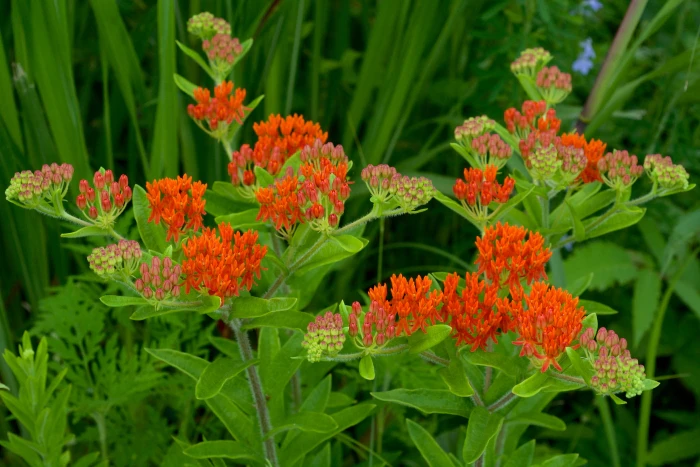
Butterfly milkweed (Asclepias tuberosa), more commonly called butterfly weed, is a smaller plant with bright and unique orange flowers. It thrives in dry, sunny spots and can only self-seed into exposed soil. It does not spread through its roots.
These three milkweeds are the most common in the nursery trade. But there are other native milkweeds, some of which can do well in New England yards and landscapes.
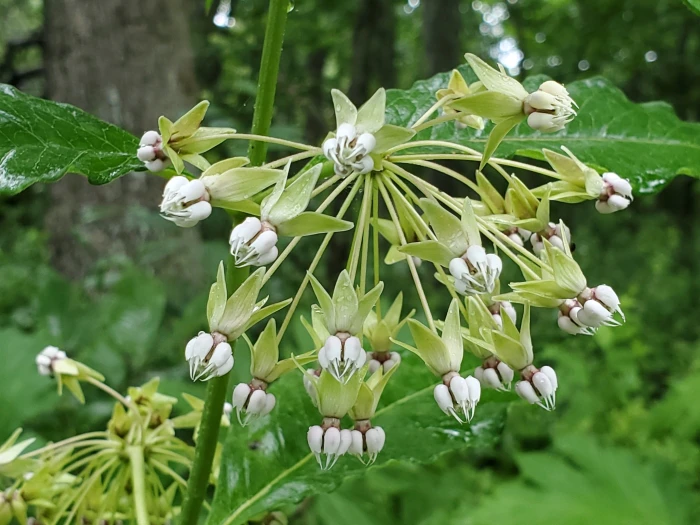
One of those species is called poke milkweed (Asclepias exaltata), which is completely different from the infamous American Pokeweed (Phytolacca americana). This three- to five-foot tall milkweed with cream-colored flowers does best in fertile soils and does well in shady spots. If it were more commercially available, it would probably be a larger part of the conversation, as it fits the shade niche unlike the other common species.

One to avoid is tropical milkweed (Asclepias curassavica). Tropical milkweed isn’t as harmful to monarchs in the temperate North as it is in the southern states, where it can persist over winter and harbour the OE parasite. But it stays green later into fall, and its presence can signal to migrating monarchs that it’s still breeding season. When that happens, monarchs may reproduce instead of migrating - and those eggs will not survive the cold.
Be careful when shopping for milkweed at garden centers and nurseries, because not only is tropical milkweed often available, but it is sometimes mislabeled. There's additional risk purchasing mature milkweed plants from garden centers because they may have been treated with pesticides by the growers - and the garden center may not be aware of that. Milkweed is best grown from seed, though they can be grown from deep landscape plugs as well.
To give monarchs the best chance of success, try planting milkweed directly in native, unamended soil and arranging the plants in clusters. Hungry caterpillars consume foliage voraciously, and grouping plants ensures there is enough food to carry them through pupation. If soil has to be amended to support the milkweed species you want to grow, it's probably best to select a different milkweed or a different planting location.
While backyard gardens cannot fully replace the vast wild habitats lost to changing agricultural practices across the Midwest in the 1990s and 2000s, cultivated plantings have become more important over time - and migrating monarchs are actively using cultivated milkweed, even in urban areas.

Common milkweed isn’t always welcome - just ask a farmer. If you must mow or manage fields containing milkweed in Northern New England, avoid cutting during July and August when eggs and caterpillars are actively feeding. Inspect milkweed closely before doing any clearing in June or October. Every year's timing is a bit different.
For established stands of common milkweed, cutting the stems back by roughly half in early June (before monarchs arrive in Northern New England) prompts the plant to push out tender new leaves by July. This simple trick extends high-quality food availability right as egg-laying reaches its peak, and results in attractive, more compact plants.

Chrysalis Habitat
When monarch caterpillars are done feeding and ready to pupate and form a chrysalis, they can travel upwards of 30 feet away from the milkweed. Caterpillars routinely form chrysalises on nearby shrubs, fence posts, garden structures, or tall perennial stems.
If you can, avoid heavy pruning, string trimming, or pesticide applications within a 30-foot radius of your milkweed patch during mid-to-late summer.
Nectar from Spring Arrival to Fall Departure
Adult monarchs require open, accessible flowers rich in sugar and amino acids to power their flight and build fat reserves for migration.

While milkweed is a valued nectar plant for monarch butterflies, they are just one flower among many that are attractive to monarchs and other large butterflies. Adult monarchs need a variety of flowers rich in sugar and amino acids from spring to fall. They prefer wide, flat landing pads or dense, tubular flower clusters.
Cultivars sometimes offer less nectar resources, so choose cultivars carefully and with pollinator value in mind. They are bred for different purposes, and some are sterile or have complex and inaccessible flower structures. There's an article from Xerces in the sources list at the bottom of this page about cultivars.

Spring arriving monarchs from the southern states may struggle to find sufficient nectar sources. Well-known native early bloomers include golden alexander (Zizia aurea), wild lupine (Lupinus perennis), and wild columbine (Aquilegia canadensis). Popular non-native garden flowers can be helpful too, such as sweet alyssum (Lobularia maritima) and catmint (Nepeta sp.).

The summer generation has far more options, and finding food is rarely a problem. That said, natives like joe-pye weed (Eutrochium sp.), coneflower (Echinacea sp.), bee balm (Monarda sp.), and blazing star (Liatris sp.) are some of the favorites. Non-natives like Mexican sunflower (Tithonia rotundifolia) and zinnia (Zinnia sp.) are consistent favorites.

With zinnias, cultivar choice is important. Avoid ultra-dense "double-dahlia" style zinnias where packed petals block the butterfly from accessing the nectar. 'Benary’s Giant', 'State Fair', and 'Cut and Come Again' are nice options among many.

Fall is critical because the so-called super generation, which attempt the migration to central Mexico, need to build up sufficient fat reserves for the journey. Asters and goldenrods are the critical native perennials - New England aster (Symphyotrichum novae-angliae), showy goldenrod (Solidago speciosa), and stiff goldenrod (Solidago rigida) are great additions to your landscape if not already present naturally. Blue mistflower (Conoclinium coelestinum) and New York ironweed (Vernonia noveboracensis) are attractive nectar sources as well. Augment with your Mexican sunflower and zinnias, which should still be blooming - deadhead as necessary.

Grouping plants together is best practice. Don’t just plant one of a species - plant 3 to 5 in a clump. Be conscious of plant selection, not just in terms of what plants will thrive in your site conditions but also their growth habits - some natives are too aggressive for small gardens.
The Fine Line Between Support and Intervention
Planting milkweed and nectar plants are helpful actions people can take to support monarchs. Other interventions are controversial, and can have the opposite effect.
it’s a painful reality that the vast majority of monarchs don’t survive to become butterflies and successfully reproduce. The highest mortality is among eggs and young caterpillars. But there’s high mortality at every stage of their life cycle. There always has been, and monarchs, like many animal species, have evolved with this reality.
When a monarch transitions from egg to caterpillar to butterfly, and in the case of a female lays eggs, think of that as the monarch successfully completing its life cycle.

Captive Rearing
Bringing caterpillars indoors or enclosing outdoor milkweed in mesh cages is an increasingly common trend among enthusiasts. While well-intentioned, published studies show that captive-reared migratory monarchs are 3 to 8 times less likely to complete their journey south compared to wild butterflies.
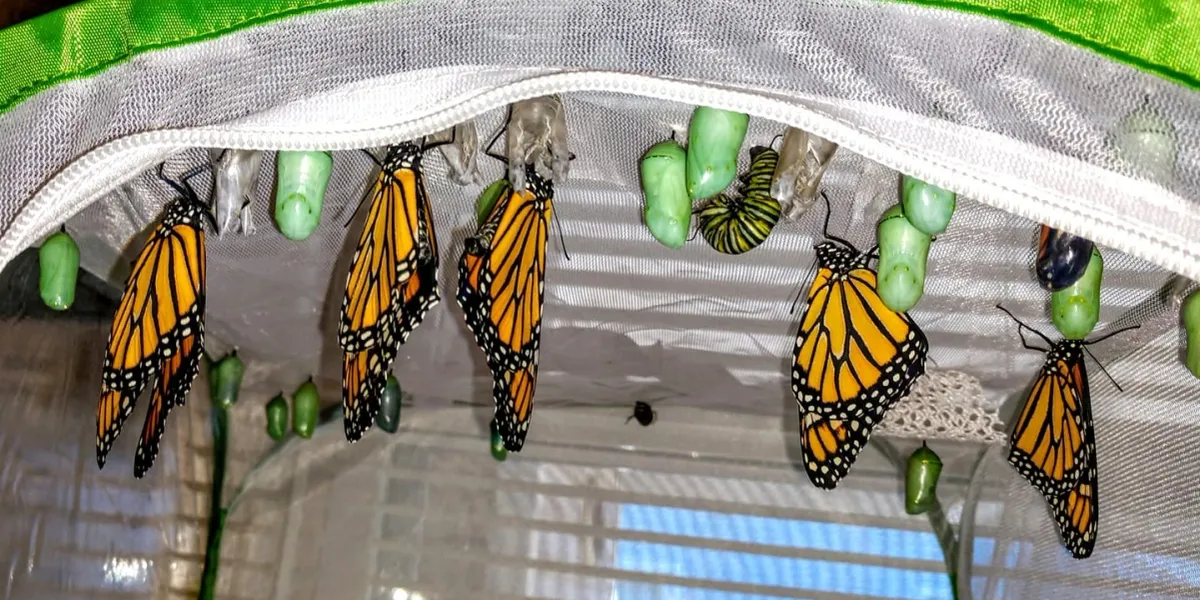
Disadvantages identified in captive-reared populations include:
- Smaller wing surface area and flimsier wing structures
- Reduced flight strength and speed
- Impaired navigational orientation during fall migration
- Higher rates of OE parasite transmission
While far fewer captive-reared butterflies succeed in the super generation, the dynamic is different for the summer generation. Early- and mid-summer captive-reared monarchs may survive and reproduce despite weaker genetics - in contrast to wild monarchs, among whom only the strongest survive, strengthening the gene pool.
Even outdoor mesh enclosures that maintain natural lighting disrupt natural selection. Caterpillars raised in protective cages tend to develop weaker grip strength, rounder wing profiles, lighter coloration, and roughly half the migratory success rate of their wild counterparts.

Critics of a hardline position on captive rearing point to the undeniable educational value of raising a small number of caterpillars. While indoor conditions may not be ideal for those individual butterflies, the hands-on experience in classrooms and nature centers inspires people of all ages and helps builds public support for conservation.
Predation and Competition
High egg and larval mortality is an established part of monarch ecology. While watching a caterpillar fall victim to a garden predator can be difficult, northern summer monarch populations remain robust and are biologically built to absorb high natural losses. The primary threat to the species exists on their wintering grounds in Central Mexico, where the Monarch Butterfly Biosphere Reserve faces pressures from illegal logging, avocado farm expansion, disease, and extreme weather.

Some native species co-exist with monarch caterpillars, like milkweed bugs and beetles and milkweed tussock caterpillars (Euchaetes egle). Monarchs have native predators too, such as paper wasps (Polistes sp.) and yellow jackets (Vespula sp.). Monarchs are also targets of native parasitoids, including several species of tachinid fly.

Monarchs also have non-native competitors and predators, like the bright yellow oleander aphid (Aphis nerii), which can overwhelm milkweed but also attracts beneficial native predators. There are non-native species of paper wasps and yellow jackets, but they look similar to their native counterparts. I do remove Chinese mantis (Tenodera sinensis), a large non-native predator that indiscriminately consumes pollinators.

Shifting focus from protecting individual caterpillars to supporting the broader ecosystem is ultimately how we help build long-term resilience for wild monarchs and other wildlife.
Participating in Citizen Science
There's still more to learn about monarchs, and research can help improve conservation strategies. Researchers have a secret weapon when it comes to monarchs: gardeners like you and me.
Use the platform Journey North to record your first spring sightings of monarch eggs, larvae, and adults. Also log wild milkweed populations on Journey North - particularly species other than the widespread common milkweed (Asclepias syriaca).
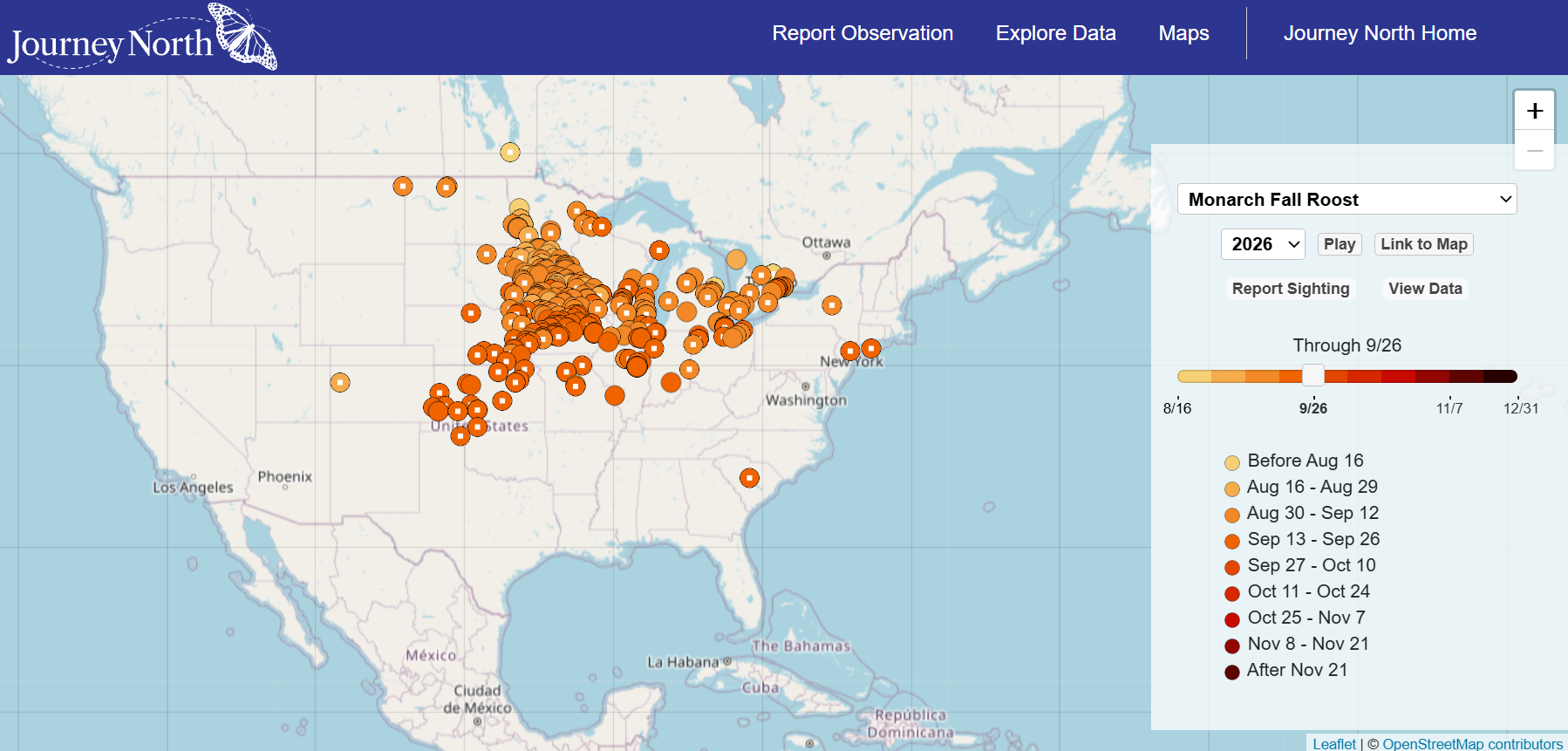
Tracking these seasonal patterns deepens your connection to your property and wild places while providing researchers with real-time data to refine conservation strategies across North America.
The Path Forward

In the end, the impulse to save every caterpillar comes from a place of genuine wonder - a desire to protect a spark of light in a world growing darker for wildlife. But conservation requires us to put our faith and hope in the evolutionary wisdom that has sustained monarchs to this day.
Supporting the migratory monarch is ultimately an exercise in trusting natural ecological processes. By selecting site-appropriate native milkweeds, planting continuous nectar sources, and leaving pupation zones undisturbed, we create a landscape that supports the entire life cycle naturally. When we step back and let native habitats function as intended, we give these resilient butterflies the best possible chance to continue their journey for generations to come.